1/48 U.S Paratrooper ‘’Bazooka’’ Marching (Normandy 1944) No.4
7,20€
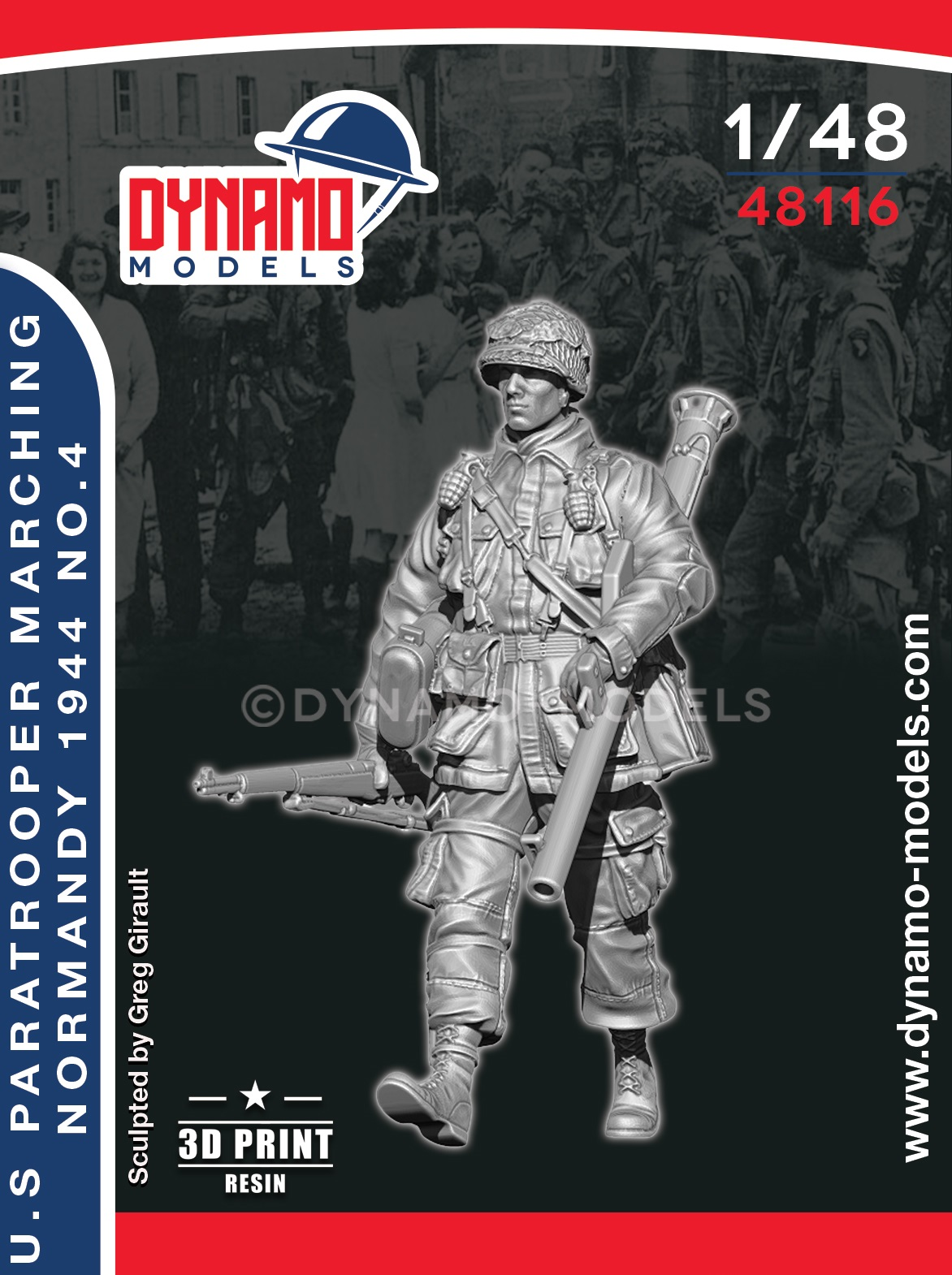
The 1/48 U.S. Paratrooper “Bazooka” Marching (Normandy 1944) No.4 offers a highly detailed portrayal of an airborne anti-tank specialist advancing through the bocage during the D-Day campaign. With precise gear, realistic movement, and strong diorama versatility, it enhances any Normandy airborne display with authenticity and dramatic presence.
What’s Included:
- 1 resin U.S. paratrooper bazooka gunner (1/48 scale)
- Assembly required
- Unpainted figure
- Glue and paint not included
Historical Context & Theme
The 1/48 U.S. Paratrooper “Bazooka” Marching (Normandy 1944) No.4 represents a crucial element of American airborne operations during the Normandy invasion. Equipped with the M1A1 bazooka, airborne anti-tank teams played a vital role in countering German armor in the dense bocage landscape. Their presence allowed small units of paratroopers—often cut off or operating independently after scattered landings—to confront armored threats they might otherwise have been forced to avoid. Although not as powerful as the German Panzerfaust or Panzerschreck, the U.S. bazooka provided essential firepower in ambush tactics, particularly within the tight constraints of hedgerow fighting.
This marching bazooka gunner embodies the movement and readiness required of airborne anti-tank teams. After landing across wide sectors—beaches, flooded fields, and farmland—paratroopers regrouped under immense pressure. Officers and NCOs organized mixed teams formed from whatever personnel they encountered. Bazooka-armed soldiers were often pushed to the front of advancing patrols, ready to respond to sudden encounters with armored cars, half-tracks, or entrenched machine-gun positions. Their pace had to be steady yet cautious, moving with the squad but remaining prepared to deploy instantly.
Normandy’s landscape forced paratroopers to traverse miles of narrow lanes and terrain broken by thick hedgerows, ideal for ambushes. German forces, including elements of the 6. Fallschirmjäger Regiment, 91. Luftlande Division, and various armored detachments, defended these areas aggressively. Bazooka teams were essential in breaking strongpoints, neutralizing vehicles attempting to counterattack, and supporting infantry advances through the bocage network. The figure’s forward stride, firm grip on the bazooka, and determined posture capture the tension of these missions—advancing with purpose while knowing that every step could bring enemy contact.
This sculpt reflects the grit and adaptability that defined U.S. airborne troops during the campaign. It is a tribute to the soldiers who carried heavy anti-tank equipment across difficult terrain, often under fire, during one of the most pivotal operations of the Second World War.
Figure Details & Realism
The Bazooka Rifleman No.4 is crafted with high precision to accurately portray airborne anti-tank equipment and posture.
Key sculpted details include:
– M42 reinforced paratrooper uniform with crisp seams and realistic folds
– M1A1 bazooka carried securely on the shoulder in a natural marching pose
– Web gear including ammunition pouches, suspenders, and utility pockets
– Correctly sculpted airborne boots with defined laces and tread pattern
– Helmet with airborne-style chinstraps and period-accurate shape
– Realistic weight distribution showing effort of carrying heavy equipment
– Straps, clips, webbing tension, and uniform texture rendered with sharp clarity
– Focused facial expression reflecting alertness and battlefield awareness
The marching motion is dynamic yet controlled, making the figure excellent for squad formations and tactical movement scenes.
Diorama & Display Use
This figure is highly versatile and ideal for Normandy airborne dioramas.
Recommended placements:
– Advance through hedgerow terrain, pairing naturally with riflemen and officers
– Patrol or scouting formations, placing the bazooka gunner centrally or slightly behind the lead elements
– Ambush preparation scenes, representing a team moving into position
– Village approaches, entering areas defended by German infantry
– Combined fireteam compositions, matching well with radiomen, NCOs, and supporting troops
– Carentan and La Fière engagements, where bazooka men played key roles
– Marching sequences, integrating with No.1, No.2, and No.3 riflemen
The heavy weapon gives the figure strong visual presence and tactical importance in any composition.
Material & Customization
The high-quality resin cast offers smooth surfaces and sharp detailing suited for advanced painting.
Customization ideas:
– Weathering on boots and trousers using earth tones from Normandy soil
– Subtle highlight transitions on the M42 uniform
– Wear and dust effects on the bazooka tube
– Helmet scuffs or textured paint for combat realism
– Natural skin-tone variation for lifelike appearance
Assembly and painting required. Glue and paint not included.
Who It’s For
This figure is ideal for:
– Diorama builders focused on airborne anti-tank actions
– Collectors of WWII U.S. paratrooper miniatures
– Painters seeking dynamic marching poses with heavy equipment
– Modelers assembling complete airborne patrol formations
– Hobbyists expanding 1/48 D-Day and Normandy collections
Its heavy-weapon role adds tactical depth to any scene.
| Poids | 0,01 kg |
|---|---|
| Brand | Dynamo Models |
| Country | United States |
| Material | 3D print |
| Period | WW2 |
| Scale | 1/48 |