1/48 U.S Paratrooper ‘’MG tripod’’ Marching (Normandy 1944) No.8
7,20€
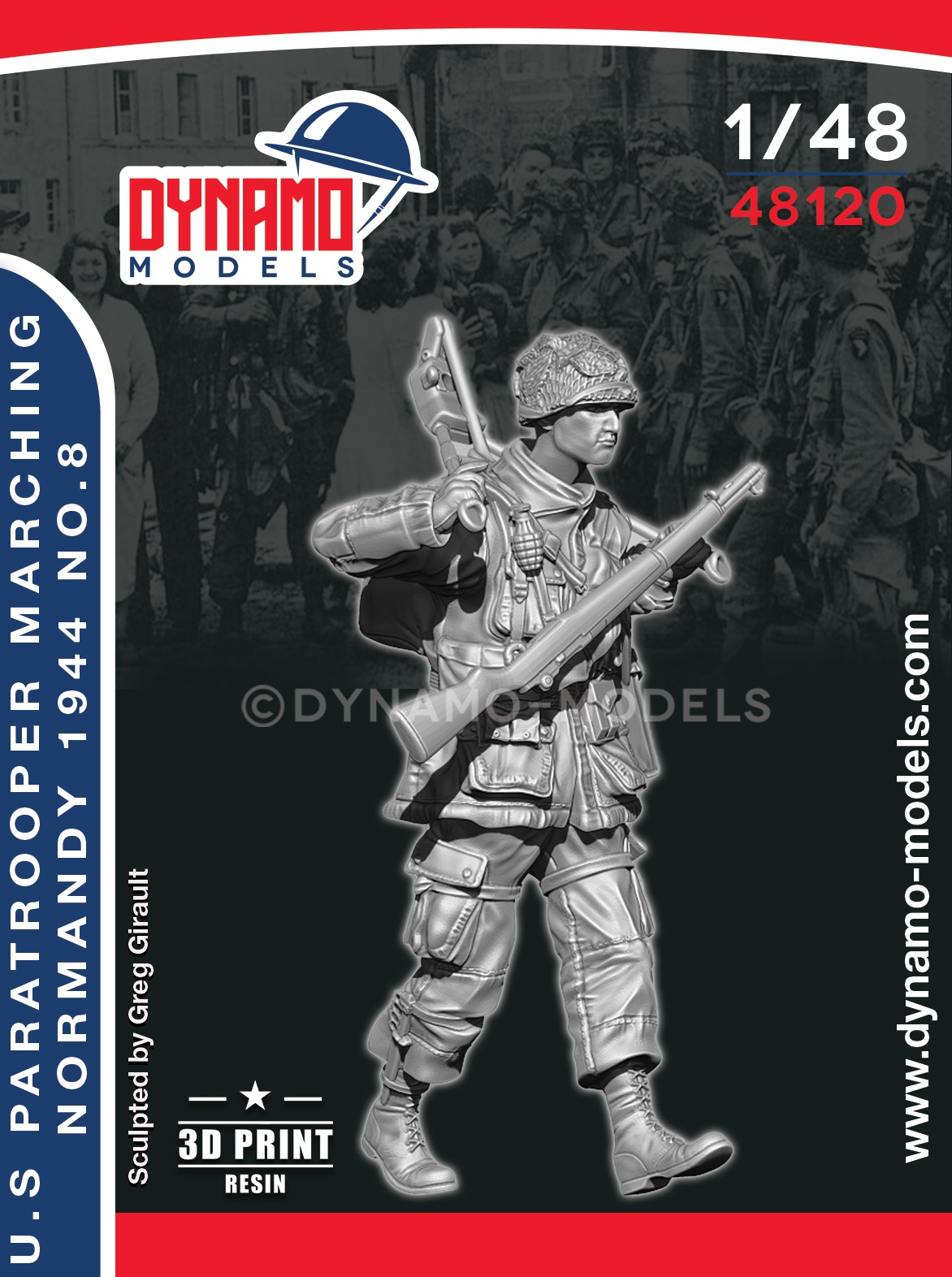
The 1/48 U.S. Paratrooper “MG Tripod” Marching (Normandy 1944) No.8 delivers an authentic representation of an airborne machine-gun team assistant advancing through the bocage on D-Day. With accurate gear, a dynamic marching posture, and strong diorama versatility, this figure brings depth and tactical realism to any Normandy airborne scene.
What’s Included:
- 1 resin U.S. paratrooper MG tripod figure (1/48 scale)
- Assembly required
- Unpainted figure
- Glue and paint not included
Historical Context & Theme
The 1/48 U.S. Paratrooper “MG Tripod” Marching (Normandy 1944) No.8 represents a critical member of an airborne machine-gun team advancing through the bocage during Operation Overlord. In U.S. airborne doctrine, the machine gun was essential for both offensive and defensive operations, and its effectiveness depended not only on the gunner, but equally on the paratrooper responsible for transporting the tripod. Without the tripod, the M1919A4 machine gun could not be deployed for sustained, stabilized fire—making the role of the tripod carrier indispensable.
In the scattered aftermath of the D-Day night drops, small groups of paratroopers moved swiftly to consolidate positions, often joining with unfamiliar soldiers from other companies or battalions. Machine-gun teams were formed on the spot, pairing available gunners and assistants as needed. The tripod bearer advanced alongside the gunner, staying ready to deploy the weapon the moment contact occurred. This was especially important in the confined terrain of the Normandy hedgerows, where firefights erupted suddenly and required immediate suppressive fire.
The bocage landscape forced airborne units to adapt constantly. Hedgerows blocked sight lines, limited maneuvering options, and created natural ambush points. For these reasons, machine-gun tripod carriers marched with heightened alertness, prepared to drop the tripod and assist the gunner in setting up the weapon under fire. Their burden was considerable—tripods were heavy, awkward to carry, and essential for creating stable firing positions. Yet airborne troops were trained to move rapidly regardless of weight, maintaining the offensive pressure that defined the American push inland from the drop zones.
This figure portrays the tripod bearer in motion: shoulders tense, posture leaning forward, and footsteps careful yet determined. His presence in a diorama enriches the tactical narrative by emphasizing teamwork and preparedness within the airborne machine-gun crew. Whether marching toward Carentan, moving through fields near Sainte-Mère-Église, or advancing along a sunken lane, this paratrooper embodies the discipline and endurance of the U.S. airborne forces in June 1944.
Figure Details & Realism
This sculpture captures the historical accuracy and equipment layout typical of an airborne MG assistant during the Normandy campaign.
Key visual elements include:
– M1919A4 tripod carried securely over the shoulder
– M42 reinforced jacket with creases, seams, and reinforced panels
– Web gear including ammo pouches, suspenders, and personal equipment
– Airborne helmet with correct chinstrap detailing
– Jump boots featuring tread pattern, laces, and folded leather edges
– Forward-leaning marching posture displaying the tripod’s weight
– Detailed straps, buckles, and uniform tension based on equipment load
– Natural head position signaling alertness in hostile terrain
The figure integrates seamlessly with MG No.7 and other marching paratroopers, creating a complete machine-gun team for diorama compositions.
Diorama & Display Use
This paratrooper enhances a wide variety of Normandy-themed scenes.
Ideal placements include:
– Machine-gun team patrols advancing through bocage
– Column movements approaching contested crossroads or villages
– Approach to contact scenes showing a squad preparing for engagement
– Pre-deployment positions, with tripod bearer supporting the MG gunner
– Carentan operations, where MG teams were decisive
– Mixed-unit formations, reflecting the scattered nature of D-Day regrouping
– Marching sequences, paired with Rifleman, SMG, Bazooka, and Radio operators
His posture and heavy equipment make him a focal point within any airborne squad display.
Material & Customization
Cast in high-quality resin, the figure offers crisp details for painters and modelers.
Customization suggestions:
– Dust or mud on trousers and boots to reflect Normandy fields
– Metallic highlights and weathering on the MG tripod
– Subtle shading to emphasize reinforcement patches on the M42 jacket
– Helmet scuffs, textured paint, or added netting
– Web gear tonal variations for realism
Assembly and painting required. Glue and paint not included.
Who It’s For
This figure is perfect for:
– Diorama builders assembling a full airborne machine-gun team
– Collectors of U.S. WWII paratroopers
– Painters who enjoy equipment-heavy subjects
– Modelers building 1/48 Normandy campaigns
– Hobbyists who want realism and tactical accuracy in squad formations
His role as an MG assistant makes him indispensable in any complete airborne diorama.
| Poids | 0,01 kg |
|---|---|
| Brand | Dynamo Models |
| Country | United States |
| Material | 3D print |
| Period | WW2 |
| Scale | 1/48 |