1/48 U.S Paratrooper ‘’Radio’’ Marching (Normandy 1944) No.5
7,20€
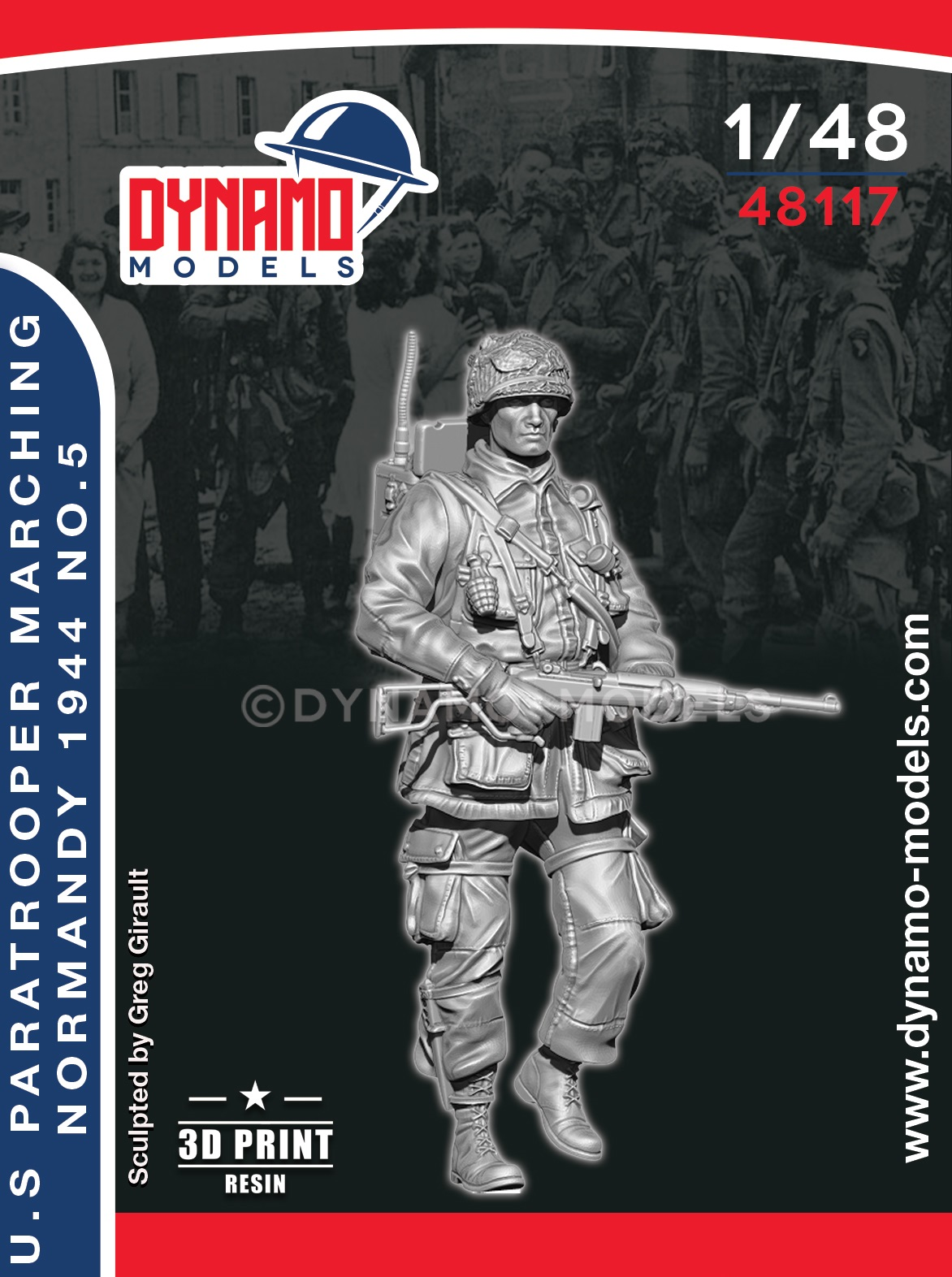
The 1/48 U.S. Paratrooper “Radio” Marching (Normandy 1944) No.5 provides a historically accurate depiction of an airborne radioman advancing through the bocage during D-Day operations. With detailed communication gear, natural movement, and strong narrative potential, this figure enhances any Normandy airborne diorama with authenticity and expressive depth.
What’s Included:
- 1 resin U.S. paratrooper radioman figure (1/48 scale)
- Assembly required
- Unpainted figure
- Glue and paint not included
Historical Context & Theme
The 1/48 U.S. Paratrooper “Radio” Marching (Normandy 1944) No.5 represents one of the most critical roles within U.S. airborne infantry during the Normandy campaign: battlefield communication. After the scattered and chaotic night drops of June 6, 1944, radio operators were essential for reestablishing command, coordinating movements, and guiding isolated paratroopers toward their objectives. Many units landed miles from their designated drop zones, and officers relied heavily on radiomen to gather intelligence, coordinate with supporting units, and call for reinforcement when needed.
The rugged bocage terrain of Normandy made communication even more vital. Thick hedgerows limited visibility, obscured movement, and broke units into small fighting groups. Radio operators carrying the SCR-300 or similar backpack radios served as the connective tissue between these elements, enabling units to navigate, plan, and react more effectively than their German counterparts. Despite the heavy weight of the radio and associated equipment, airborne radiomen were expected to keep pace with their squads, advancing through fields, ditches, and narrow paths while maintaining constant alertness.
This marching radioman captures the intensity and discipline of those movements. The forward lean of his posture, the secure grip on his equipment, and the focused gaze combine to represent a soldier balancing physical strain and tactical responsibility. Radiomen often marched at the center or rear of a patrol, protected by riflemen while remaining close to NCOs and officers who depended on them for critical updates. Their presence allowed mixed groups of scattered paratroopers to reconsolidate, adjust their plans, and maintain operational momentum even amid confusion.
Whether during the advance on Sainte-Mère-Église, the defense of the La Fière causeway, or the steps leading toward Carentan, radiomen were indispensable. This figure honors their indispensable place within airborne operations and brings historically accurate depth to any Normandy-themed diorama.
Figure Details & Realism
The Radio Operator No.5 is sculpted with meticulous attention to the equipment and uniform typical of American airborne forces during Operation Neptune.
Key sculpt details include:
– M42 reinforced airborne jacket with accurately rendered fold and seam patterns
– SCR-style radio backpack with distinct vents, straps, buckles, and surface details
– Handset cable sculpted in natural tension as the soldier marches
– Belt layout including ammo pouches, canteen, and first-aid pouch
– Detailed jump boots with laces, eyelets, and textured soles
– Helmet featuring correct airborne-style chinstraps
– Dynamic marching posture conveying burden and forward momentum
– Realistic positioning of head, shoulders, and legs to reflect physical weight of equipment
The sculpt complements the other marching paratroopers (Rifleman No.1–4), adding communication capability to any airborne unit composition.
Diorama & Display Use
This figure expands storytelling potential in Normandy dioramas thanks to its specialized role and natural marching posture.
Ideal applications include:
– Airborne patrol formations, moving through hedgerows or paths
– Command group scenes, walking near officers or NCOs
– Regrouping moments, representing a radioman joining scattered troops
– Approach to objective scenarios near villages or crossroads
– Carentan and La Fière battle recreations, where communications were crucial
– Liberation scenes, marching into newly secured areas
– Multi-figure marching sequences, enhancing realism and tactical progression
Placed at the center or rear of a formation, he contributes visually and narratively to any scene.
Material & Customization
Cast in high-quality resin, the figure features crisp details ideal for precise painting.
Customization suggestions:
– Weathering on boots and trousers to reflect Normandy soil
– Shading and highlighting on radio pack edges and components
– Olive drab and khaki variations for web gear and straps
– Helmet scuffing, chips, or textured paint for authenticity
– Subtle modulation on uniform panels to emphasize raised areas
Assembly and painting required. Glue and paint not included.
Who It’s For
This figure is perfect for:
– Diorama builders needing communication specialists in patrol scenes
– Collectors of U.S. airborne miniatures
– Painters who enjoy rendering equipment-heavy soldiers
– Modelers creating full 1/48 airborne squads
– Hobbyists expanding Normandy-themed figure collections
The radioman’s unique equipment adds diversity and realism to any display.
| Poids | 0,01 kg |
|---|---|
| Brand | Dynamo Models |
| Country | United States |
| Material | 3D print |
| Period | WW2 |
| Scale | 1/48 |